
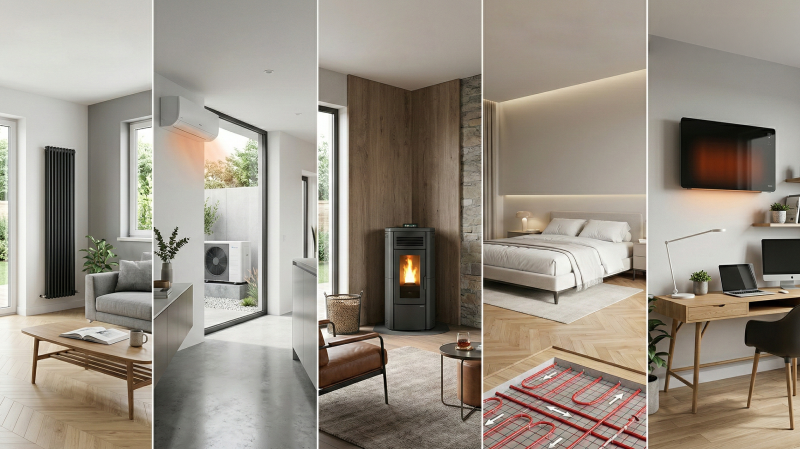
In 2026, choosing the best home heating system requires careful evaluation, especially considering rising energy costs and policies aimed at transitioning toward lower-impact energy solutions.
However, there is no universally perfect system. The best option depends on several factors such as the type of building, insulation level, climate zone, usage habits, and available budget, both for installation and long-term operation.
What is the best heating system today?
There is no single heating system that is ideal for every situation. The choice should always be based on a set of variables that need to be assessed case by case.
In particular, it is important to consider:
- Building insulation. A well-insulated building allows the use of low-temperature, high-efficiency systems. If heat loss is significant, it may be necessary to improve the building envelope first or choose systems with higher thermal output.
- Climate zone. Heating system performance varies depending on outdoor temperatures. In mild climates, some technologies perform particularly well, while in colder regions it is essential to evaluate performance at low temperatures.
- Presence of an existing system. Replacing only the heat generator can sometimes be economically advantageous, but it does not always optimize the entire heating system. In some cases, a broader upgrade may be more appropriate.
- Primary objective. It is important to clarify whether the priority is energy savings, thermal comfort, or environmental sustainability. The best heating system is the one that aligns with these goals within the specific context of the home.
Main home heating systems compared
Traditional radiator heating
Traditional radiators work through the circulation of hot water heated by a boiler. The water flows through the radiator, warming the metal body, which then releases heat into the room through convection and radiation. Thermostatic valves allow temperature regulation in each room.
Advantages
- well-established and widely used technology
- compatibility with different heat generators
- possibility of gradual upgrades
Limitations
- less uniform heat distribution compared to radiant systems
This solution is particularly suitable for light renovations or generator replacement, especially when the existing heating system is maintained.
Steel vs aluminium vs cast iron radiators
- Steel radiators → Offer good thermal output, relatively fast response time, and high design flexibility (as in steel tubular radiators).
- Aluminium radiators → High thermal conductivity, rapid heating, and low thermal inertia.
- Cast iron radiators → Have greater thermal inertia: slower heating times but gradual and long-lasting heat release.
Alongside traditional radiators, there are also solutions that combine function and design, such as IRSAP designer radiators, created to integrate seamlessly into contemporary interiors.
Underfloor radiant heating
Radiant floor heating distributes heat through pipes embedded within the floor structure. It operates at low temperatures and provides very uniform comfort, with smaller temperature differences between floor and ceiling.
It is particularly suitable for new constructions or major renovations.
Limitations
- higher installation costs
- slower response time compared to other heating systems
Heat pumps
Heat pumps transfer energy from the external environment into the building, producing more thermal energy than the electrical energy they consume.
Under favorable conditions, they offer very high efficiency, particularly when paired with low-temperature heating systems.
For optimal performance, the building should be well insulated with limited heat loss.
Heat pumps can be integrated not only with radiant floor systems but also with modern high-efficiency radiators designed to operate effectively at lower supply temperatures than traditional models.
Pellet or biomass stoves
Pellet and biomass stoves generate heat through the combustion of natural materials.
Advantages
- use of renewable fuels
- good heating output for specific areas
- can be integrated with existing systems
Limitations
- need for fuel storage space
- regular maintenance requirements
- less automated management compared to other systems
They are often used as supplementary heating solutions, rather than as the only heating system in large homes.
Direct electric heating
Direct electric heating converts electricity directly into heat using dedicated radiators or heating panels.
When it works best
- small homes
- well-insulated buildings
- intermittent use (holiday homes, studios, single rooms)
The main limitation is the cost of electricity. Without good insulation or with continuous use in energy-intensive buildings, operating costs can be higher compared to more efficient heating technologies.

What is the most cost-effective way to heat a home?
There is no single answer: the most economical heating system depends on the time horizon considered, the building conditions, and any available incentives.
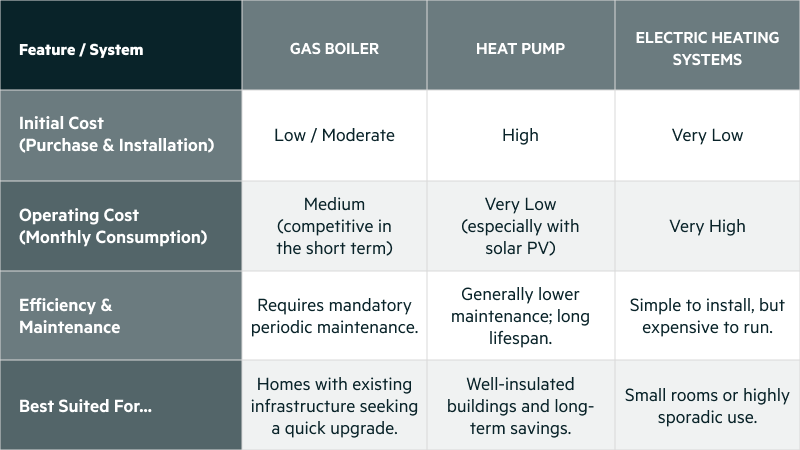
It is useful to distinguish between installation cost, operating cost, system lifespan, and access to incentives.
Installation cost
- Gas boiler (traditional or condensing). The initial investment is generally moderate, especially in homes that already have a heating system installed.
- Heat pump. The initial cost is higher, due to the technology itself and the possible need to upgrade the heating system.
- Direct electric systems. The upfront cost is relatively low, although it varies depending on the number and quality of heating units installed.
Operating cost
In the short term, a gas boiler often remains a financially competitive option, especially if the system is well maintained and properly managed.
Some practical measures can significantly affect energy consumption:
- perform regular maintenance
- maintain indoor temperatures around 20 °C
- reduce heat loss by covering windows at night
- avoid covering radiators
- install thermostatic valves or advanced control systems
- ventilate rooms briefly instead of leaving windows open for long periods
If the boiler is outdated, replacing it with a condensing boiler can reduce consumption by up to around 30%, thanks to the recovery of heat from combustion gases.
A heat pump, on the other hand, can become more cost-effective in the medium to long term, especially in well-insulated buildings and when combined with renewable energy sources such as photovoltaic systems that reduce electricity costs.
System lifespan
A properly sized and well-maintained heating system can operate efficiently for many years.
- Boilers require regular inspections and maintenance.
- Heat pumps generally have lower maintenance requirements but higher initial investment costs.
For this reason, economic evaluations should consider the entire life cycle of the system, not just installation costs.
Incentives and tax benefits
Government incentives or tax deductions can significantly influence the economic convenience of a heating system, especially in energy renovation projects where the heat generator is replaced with a more efficient solution.
Before choosing a system, it is advisable to verify:
- available financial incentives
- eligibility conditions
- long-term savings potential.
How to choose the best system based on your home
The best heating system varies significantly depending on the type of building and insulation level.
New Homes (high energy efficiency)
In homes rated energy class A or higher, with low energy demand:
- Recommended solution: heat pump combined with radiant floor heating, ideal for low-temperature operation and reduced energy consumption.
- Recommended integration: controlled mechanical ventilation (CMV) to ensure proper air exchange in highly airtight buildings.
Renovated homes
The best choice depends on the scale of the renovation.
- Full renovation: radiant floor heating with a heat pump.
- Partial renovation: condensing boiler (up to 30% savings compared to traditional models), steel radiators, preferably paired with advanced thermostatic valves.
- Intermediate solution: hybrid system (boiler + heat pump) to improve efficiency without replacing the entire heating system.
Apartment in a condominium
- Centralized heating system: thermostatic valves to regulate individual consumption.
- Independent heating system: replacing the existing boiler with a high-efficiency condensing model.
Poorly insulated homes
In buildings with significant heat loss:
- High-temperature heat pumps: compatible with existing radiators.
- Biomass systems (pellet or wood): often offer lower fuel costs.
- Inverter fan convectors: useful for quickly heating specific rooms.
The role of modern radiators in system efficiency
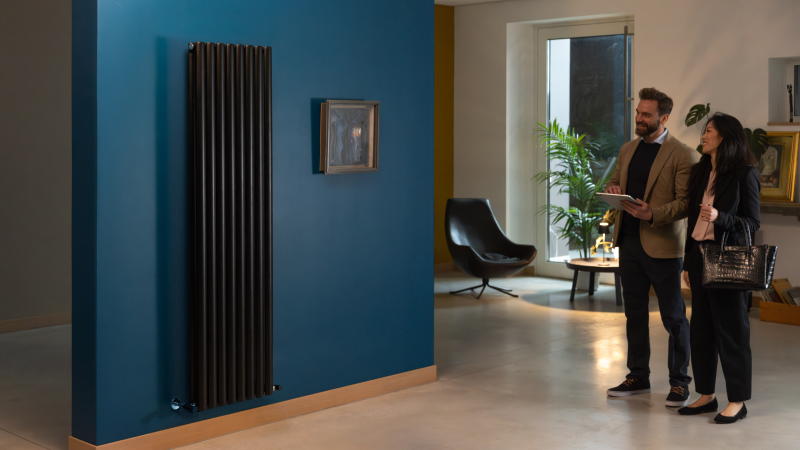
The efficiency of a heating system does not depend only on the heat generator but also on the heat emitters.
Modern radiators directly influence:
- thermal output
- response speed
- the ability to operate at lower water temperatures
New-generation models are designed with larger heat exchange surfaces and improved integration into living spaces, while maintaining good performance even in modern buildings.
Solutions from the IRSAP designer radiator and towel warmer range are developed to optimize heat exchange and allow lower supply temperatures compared with traditional systems, improving overall system efficiency.
When correctly sized, these radiators can also be combined with heat pumps, ensuring stable comfort without replacing the entire heat distribution system.
Conclusion: what is truly the best way to heat a home?
The best heating system is not a universal solution but the result of a technical evaluation that considers the building, climate, existing system, and energy goals.
Beyond the heat generator itself, the quality of heat emission plays a crucial role. Stable temperature, uniform heat distribution, and accurate regulation directly affect both comfort and efficiency.
To explore available options and evaluate radiators compatible with traditional systems or heat pumps, you can consult the IRSAP range of radiators and designer towel warmers.


