
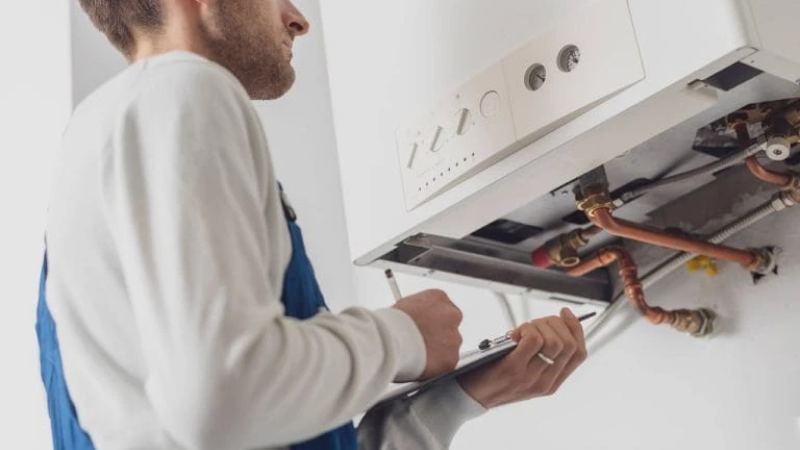
Boiler maintenance is not only about complying with a regulatory obligation. It is an essential intervention to ensure safety, reduce energy consumption and keep the heating system efficient over time.
Neglecting maintenance, on the other hand, can lead to safety issues, higher energy bills and more expensive extraordinary repairs.
In this article, we will look at:
-
how often boiler maintenance should be carried out;
-
the difference between servicing and flue gas inspection;
-
who is responsible for it;
-
costs, obligations and possible penalties.
What boiler maintenance is and what it is for
Boiler maintenance is the set of technical checks carried out to verify that the system is working correctly, safely and efficiently.
During maintenance, the boiler’s key components are checked with the aim of:
-
ensuring system safety;
-
checking correct operation;
-
reducing the risk of sudden breakdowns;
-
maintaining high energy efficiency.
A properly maintained boiler tends to:
-
consume less energy;
-
operate more reliably;
-
last longer over time.
Maintenance also plays an important role in home safety. Periodic checks help prevent problems related to combustion, including the risk of carbon monoxide leaks, a potentially very dangerous gas because it is odourless and invisible.
How often should boiler maintenance be carried out?
There is no single deadline that applies to all boilers. Maintenance frequency mainly depends on:
-
boiler model and type;
-
manufacturer’s instructions;
-
regional or local regulations.
It is also important to distinguish between routine maintenance and flue gas inspection, because they are two different interventions that are often confused.
In general:
-
routine maintenance is used to check that the boiler is working correctly;
-
flue gas inspection concerns combustion efficiency and system emissions.
The two activities may have different frequencies. For example, flue gas inspection is often carried out at longer intervals than normal routine maintenance.
Difference between routine maintenance and flue gas inspection
Routine maintenance includes a series of technical checks on the system, such as:
-
inspection of the main components;
-
checking correct operation;
-
cleaning certain parts of the boiler;
-
general safety check.
Flue gas inspection, on the other hand, concerns combustion analysis. During this intervention, the following are checked:
-
boiler energy efficiency;
-
combustion quality;
-
emission levels.
What the regulations say about boiler servicing
Regulations require the boiler to be checked periodically according to the manufacturer’s instructions and local provisions.
For the owner or system manager, this means:
-
carrying out maintenance within the required timeframes;
-
keeping documentation of the interventions carried out;
-
ensuring that checks are performed by qualified technicians.
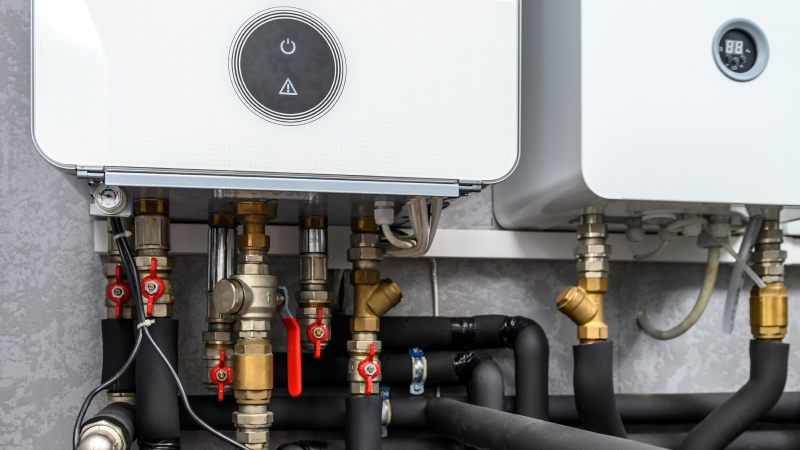
What boiler maintenance involves
During maintenance, the technician performs a series of checks to verify that the boiler operates safely and efficiently.
The most common operations include:
-
combustion check;
-
cleaning of the main components;
-
inspection of seals;
-
checking for any leaks;
-
checking system pressure;
-
inspection of the heat exchanger and safety systems.
Which components are checked
During servicing, several boiler components are checked, including:
-
burner;
-
heat exchanger;
-
seals;
-
flue gas evacuation system;
-
valves and safety devices;
-
system pressure.
These components are subject to wear over time due to:
-
high temperatures;
-
combustion residues;
-
continuous system use.
For this reason, periodic checks are important: they help keep the boiler efficient and reduce the risk of sudden malfunctions.
How long boiler maintenance takes
-
Standard maintenance generally takes between 30 minutes and one hour.
-
The duration may vary depending on:
-
type of boiler;
condition of the system;
any anomalies detected;
need for additional interventions or more thorough cleaning.
Who can carry out boiler maintenance
Boiler maintenance must be carried out by an authorised and qualified technician, certified to work on heating systems.
This is important not only to comply with regulations, but above all to ensure:
-
system safety;
-
correct boiler operation;
-
validity of the checks performed.
DIY maintenance is not recommended and, for some mandatory checks such as combustion and flue gas inspection, it is not permitted.
At the end of the intervention, the technician issues the required documentation, including the inspection report and the update of the system booklet, which are necessary to prove that maintenance has been carried out correctly.
Who should pay for boiler maintenance: landlord or tenant?
In general, routine boiler maintenance is the responsibility of the tenant, because it concerns the daily use of the system.
The tenant’s expenses normally include:
-
periodic boiler servicing;
-
flue gas inspection;
-
minor routine maintenance work.
The landlord, on the other hand, is generally responsible for extraordinary interventions, namely those related to:
-
major faults;
-
boiler replacement;
-
repairs due to system wear or structural problems.
For example:
-
if normal annual maintenance is required, the cost is usually borne by the tenant;
-
if the boiler breaks down due to age or needs to be replaced, the landlord is normally responsible.
What happens if boiler maintenance is not carried out?
Neglecting boiler maintenance does not only mean risking a penalty. Over time, it can have concrete consequences for:
-
home safety;
-
energy consumption;
-
system reliability.
What are the penalties for failure to service the boiler?
Regulations provide for possible financial penalties for those who fail to carry out mandatory boiler checks.
Fines may vary depending on the type of irregularity and local regulations, but they generally fall within ranges that can go from a few hundred euros, around €500, up to several thousand euros, around €3,000, in the most serious cases.
In addition to the financial penalty, failure to carry out maintenance can also create problems in the event of system inspections or disputes related to safety.
Risks for safety, consumption and boiler lifespan
Neglected maintenance can cause:
-
increased energy consumption;
-
reduced boiler efficiency;
-
higher likelihood of sudden faults and shutdowns.
Safety is also a fundamental aspect. Problems related to combustion or flue gas evacuation can increase the risk of potentially dangerous malfunctions in the home environment.
In addition, a boiler that does not work properly tends to wear out more quickly, reducing the overall lifespan of the system and increasing repair or replacement costs over time.
How much boiler maintenance costs
The cost of boiler maintenance can vary depending on several factors, including:
-
type of system;
-
boiler model;
-
geographical area;
-
any additional interventions required.
In general, routine maintenance has a lower cost and includes standard checks on the operation of the system.
Flue gas inspection and combustion efficiency checks may instead have a separate cost, especially when carried out as a specific intervention required by regulations.
The condition of the boiler also affects the final price: older or poorly maintained systems may require more thorough cleaning or additional checks.
When it is best to carry out boiler maintenance
The best time to carry out boiler maintenance is generally before winter, or during the warmer months, when the system is used less.
How to improve heating efficiency beyond boiler maintenance
A well-maintained boiler is important, but heating efficiency also depends on many other elements of the system.
To achieve lower consumption and better comfort, it is essential to consider:
-
quality of the heating terminals;
-
temperature regulation;
-
intelligent system management;
-
uniform heat distribution throughout the rooms.
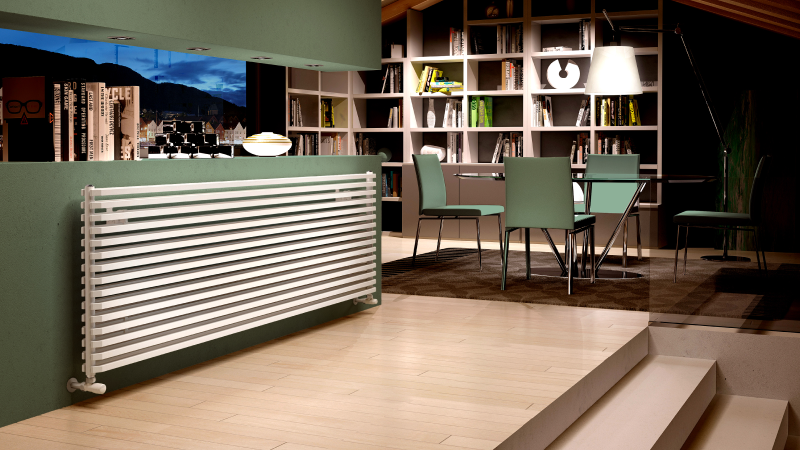
Radiators also have a direct impact on the overall performance of the system. Modern, high-efficiency solutions make it possible to improve heat output and optimise consumption. You can explore below the solutions dedicated to IRSAP radiators and the range of heated towel rails and design radiators.
Home comfort also depends on indoor air quality. Controlled mechanical ventilation systems help maintain healthier and more balanced environments, improving the overall well-being of the home. Here you can learn more about IRSAP solutions dedicated to controlled mechanical ventilation.


