
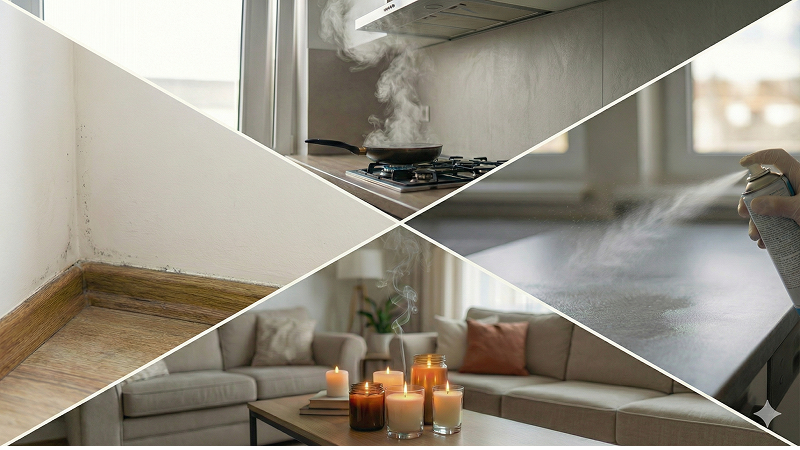
Even though the home is the place where we feel most protected, it can hide invisible sources of pollution that affect air quality and, over time, the wellbeing of those who live there.
This is known as indoor pollution, a phenomenon that is often underestimated but potentially harmful to health. In this article, we look at what causes it, what the consequences are and which solutions can effectively reduce it.
What is domestic pollution (or indoor)
Indoor pollution refers to the presence of harmful substances in the air of enclosed spaces such as homes, offices or schools. In many cases, the concentration of these pollutants can be higher than outdoors, especially in poorly ventilated buildings.
Why domestic pollution is often underestimated
Indoor pollution is frequently overlooked because it is not immediately noticeable and its effects are not always easily linked to air quality.
The main reasons include:
- False sense of safety. There is a common belief that the home protects us from pollution, without considering that indoor air can accumulate both outdoor pollutants and internal sources of contamination.
- Non-specific symptoms. Fatigue, irritation or breathing difficulties are often attributed to stress or tiredness rather than poor air quality.
- Long-term effects. Many pollutants act slowly, and damage may only become evident after years, making it difficult to identify the root cause.
The main sources of indoor pollution
Continuous sources of pollution
These are constantly present inside the home and release harmful substances over time, often silently. They include:
- building materials and finishes (paints, adhesives, flooring);
- furniture and furnishings that emit volatile organic compounds (VOCs);
- mould and persistent humidity;
- radon gas rising from the ground;
- continuous domestic combustion (stoves, fireplaces, gas cookers).
Episodic sources of pollution
These are linked to everyday activities that produce temporary peaks of pollutants:
- cooking, especially without adequate extraction;
- use of detergents, sprays and air fresheners;
- tobacco smoke and the burning of candles or incense;
- occasional use of combustion appliances or auxiliary heating systems.

The most common pollutants in indoor air
Fine particulate matter (PM10, PM2.5, PM1)
Fine particles are microscopic pollutants that remain suspended in the air and can penetrate the respiratory system. They originate both from outdoors (traffic, smog) and from indoor sources such as cooking, combustion and smoking. The finest particles (PM2.5 and PM1) are the most dangerous, as they can reach deep into the lungs.
Volatile Organic Compounds (VOCs)
VOCs are chemical substances emitted by paints, detergents, adhesives, furniture and air fresheners. They can cause irritation, headaches and, over the long term, more serious health effects, especially in poorly ventilated environments.
Formaldehyde
Formaldehyde is a particularly widespread VOC, released by pressed wood panels, fabrics, coatings and some household products. It is irritating to the eyes and respiratory system and is classified as a potentially carcinogenic substance.
Carbon dioxide and carbon monoxide (CO₂, CO)
- Carbon dioxide (CO₂) is not toxic, but high levels indicate poor ventilation and are associated with drowsiness and reduced concentration.
- Carbon monoxide (CO), on the other hand, is extremely dangerous and can result from incomplete combustion (boilers, stoves, fireplaces), posing serious health risks.
Bioaerosols: allergens, pollen, mould and bacteria
Bioaerosols include mould spores, pollen, dust mites and bacteria present in the air. Their concentration increases in humid and poorly ventilated environments and can trigger allergies, asthma and respiratory disorders.
The effects of domestic pollution on health
The most common issues fall under what is known as “sick building syndrome”, a condition linked to poor indoor air quality. The main health effects include:
- Respiratory problems. Coughing, airway irritation, asthma and bronchitis are often associated with fine particulate matter, mould, allergens and passive smoke.
- Allergies and irritation. Dust mites, pollen, mould and chemical substances can cause rhinitis, red or irritated eyes, skin itching and sore throats.
- General discomfort and cognitive issues. Headaches, fatigue, drowsiness and difficulty concentrating are common in environments with stale air and high CO₂ levels.
- Long-term risks. Prolonged exposure to pollutants such as formaldehyde, radon and passive smoke can increase the risk of chronic conditions and weaken the immune system.
Why opening windows is not enough
Opening windows is not an effective solution to indoor pollution because air exchange is discontinuous, uncontrolled and often counterproductive. The main reasons include:
- No control over incoming air. In urban or high-traffic areas, opening windows allows fine dust (PM10, PM2.5), pollen, allergens and noise to enter.
- Energy loss. Heat is lost in winter and cool air in summer, forcing the system to work harder and increasing energy consumption.
- No filtration. Outdoor air enters untreated, without filters capable of trapping pollutants or harmful substances.
- Humidity and condensation remain unresolved. Irregular ventilation does not remove moisture consistently and can encourage mould growth.
- Indoor sources remain active. Furniture, cleaning products, cooking and occupants continue to generate pollutants even after windows are closed again.

Ventilation and air quality: the role of controlled air exchange
Indoor air quality largely depends on how often and how effectively the air is renewed. Proper air exchange must be continuous and controlled, not occasional, in order to prevent the build-up of pollutants, humidity and CO₂.
For filtered and efficient air renewal, the most effective solution is controlled mechanical ventilation, which improves air quality without energy waste and without the need to open windows.
Practical solutions to reduce domestic pollution
Reducing indoor pollution is possible by combining good daily habits with technologies designed to control air quality.
Daily habits that make a difference
Small but consistent actions help limit the accumulation of pollutants at home:
- ventilate rooms during the least polluted times of the day;
- avoid smoking indoors and limit the use of candles and incense;
- use low-chemical cleaning products;
- always switch on the extractor hood when cooking;
- avoid drying laundry in poorly ventilated spaces;
- keep temperature and humidity under control.
Supporting technologies
When habits alone are not enough, technology becomes a key ally:
- air quality and CO₂ sensors, to monitor pollution levels in real time;
- air purifiers, useful for reducing fine dust and allergens;
- controlled mechanical ventilation systems, which ensure proper air exchange within the space by replacing indoor air with appropriately filtered outdoor air, thereby consistently reducing pollutants, humidity, and unpleasant odors.
Controlled mechanical ventilation and indoor air quality: a structural solution
A mechanical ventilation system ensures the constant and automatic exchange of air in enclosed spaces. Stale air is extracted, while fresh, filtered air is brought in from outside, without the need to open windows and without significant energy loss.
There are two main types of controlled mechanical ventilation:
- Localized controlled mechanical ventilation: installed in individual rooms, ideal for minor renovations or targeted interventions.
- Centralized controlled mechanical ventilation: serves the entire home via ductwork, an optimal solution for new construction or complete renovations, offering superior levels of comfort and efficiency.
IRSAP integrates ventilation into an advanced vision of home comfort. Its controlled mechanical ventilation systems are designed to:
- consistently improve indoor air quality;
- reduce humidity and pollutants without wasting energy;
- integrate with modern systems and high-performance homes.
Domestic pollution and living comfort: one connected issue
Wellbeing indoors is the result of a balance between three closely interconnected factors:
- Air quality: constant air exchange, pollutant filtration, reduction of CO₂ and VOCs.
- Temperature: even heat distribution, without fluctuations or cold spots.
- Humidity: controlled levels to prevent condensation, mold and excessively dry air.
When one of these elements is out of balance, overall comfort suffers, even if the others are correctly managed.
For this reason, air management must work in harmony with the heating system. Advanced radiator solutions help maintain stable and evenly distributed temperatures, indirectly contributing to humidity control and improved perceived comfort.
Conclusion
Reducing indoor pollution means making a real improvement to health, comfort and quality of life. With the right habits and well-designed building systems, it is possible to breathe cleaner air every day, without compromise.


