
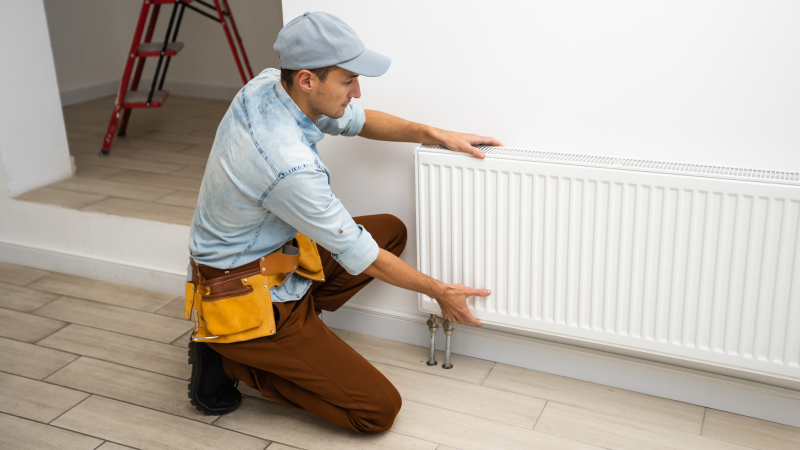
Replacing radiators is a fairly common job during a renovation or bathroom upgrade, but also when you want to improve comfort and the overall look of a space. With the right preliminary checks and by following a few key steps, the work can be carried out simply and safely, without invasive changes to the existing system.
In this guide, we will explain how to replace radiators step by step, highlighting what to check before installation and the main stages of the process.
When is it worth replacing a radiator?
Here are the main situations where replacing a radiator is truly advantageous:
- Switching to Low-Temperature Heating Systems. This is particularly recommended when installing next-generation heat generators, such as heat pumps or condensing boilers. Modern radiators are designed to operate efficiently even with lower water temperatures, helping to reduce energy consumption and emissions. However, for a low-temperature system to function properly, the radiator must be correctly sized according to the room’s heating demand. For this reason, a proper thermal calculation carried out by a qualified professional is essential.
- Renovations without invasive building work. During renovations, replacing a radiator allows you to upgrade the heating system without modifying the existing pipework. There are solutions specifically designed for this type of intervention, such as models that adapt to existing pipe centres (the distance between pipes) or modular ranges that make it easier to replace old cast iron, aluminium or fan-coil units with more contemporary designs.
- Improved comfort and technological upgrade. Replacing a radiator also means integrating more advanced features. For example, choosing a model prepared for dual-fuel operation allows you to use the towel radiator even when the boiler is switched off, while compatibility with smart systems (such as IRSAP NOW) enables room-by-room temperature control.
Can you replace a radiator without modifying the system?
Yes, it is absolutely possible to replace a radiator without altering the existing hydraulic system, avoiding invasive and costly building work.
Today, many radiators feature connections compatible with older models or can be installed using specific adapters, provided that the pipe centres are correctly checked.
During replacement, it is advisable to assess whether the valves should also be changed, especially if they are outdated, and to consider installing appropriate control systems, such as traditional thermostatic heads or smart valves, which allow more precise temperature management and improved energy control.
It is also essential to carry out a correct heating load calculation to ensure the new radiator provides adequate performance.
IRSAP has developed so-called “No Problem” solutions, specifically designed to replace cast iron or aluminium radiators. These models adapt to existing pipe centres, allowing the radiator to be renewed without modifying the system.
If you prefer to remove any dependency on hydraulic pipework altogether, electric radiators can also be considered. These “plug & play” solutions require only a power socket and are particularly practical in second homes or renovated spaces where maximum installation simplicity is desired.
What to check before starting the replacement
Before replacing a radiator, several preliminary checks are essential.
Type of system (hydraulic, electric, hybrid)
If the home has a hydraulic system, the new radiator must be compatible with the boiler or heat pump. For electric models, it is necessary to verify the presence of a suitable nearby power outlet. Hybrid radiators require both connections and offer greater flexibility, but should be selected based on the room’s actual needs.
Measurements, pipe centres and connection position
Careful measurement is crucial. In addition to width and height, it is important to verify the pipe centre distance (between flow and return pipes) and the position of the connections (side, central or bottom). These factors determine compatibility with the existing system and help avoid pipe modifications.
Size and output of the new radiator
The heating output of the new radiator must be suitable for the room size and level of insulation. This calculation should always be performed by a qualified heating technician.
Choosing a radiator that is too small may compromise comfort, while an oversized one may lead to unnecessary energy consumption.
How to replace a radiator: preparation
Before starting, make sure the system is completely switched off and there is no pressure in the pipes.
- Switch off the boiler and close the water supply. Wait until the radiators have cooled down completely.
- Close the flow and return valves to isolate the radiator from the system.
- Drain residual water by placing a container underneath and opening the bleed valve.
- Remove the old radiator by disconnecting the hydraulic connections and then unscrewing the wall brackets.
Installing the new radiator
Once the old unit has been removed, you can proceed with installing the new radiator.
- Check Hydraulic Connections. Before fixing the radiator, verify compatibility between the new connections and the existing system. If pipe centres or positions do not match perfectly, adapters, valves or lockshield valves can be used to avoid modifying the pipework.
- Fix Wall Brackets. Accurate measurements are essential. Use a spirit level to ensure correct alignment. Insert suitable wall plugs depending on the wall type and securely fasten the brackets.
- Mount the radiator. Hang the radiator on the brackets and connect the flow and return pipes. Use appropriate sealing materials, such as gaskets or sealing tape, to ensure watertight connections.
Final checks and commissioning
After installation, carry out the following checks to ensure safe and correct operation.
- Refill and bleed the system. Slowly reopen the flow and return valves and refill the system. Then open the bleed valve to release trapped air. The operation is complete when only water (without air bubbles) flows out.
- Check proper operation. Switch the boiler or heat generator back on. Ensure the radiator heats evenly and carefully check for leaks at the hydraulic connections.
Important considerations before choosing a new radiator
Making an informed choice ensures the right balance between comfort, functionality and efficiency.
- Room size. The radiator must be proportionate to the space where it will be installed.
- Hydraulic or electric radiator? If the hydraulic system can be easily adapted, a traditional radiator remains an effective solution. However, if existing connections are difficult to modify or if installation simplicity is preferred, an electric radiator can be a valid alternative, especially in bathrooms, second homes or occasionally used spaces.
- Consult a professional. In case of doubts regarding system compatibility or installation methods, always rely on a qualified professional.
Replacing a radiator with IRSAP solutions
The IRSAP range includes numerous radiator models designed to be compatible with many existing systems. This versatility simplifies the replacement of old radiators, even during renovations, reducing the need for invasive pipework modifications.
Beyond technical compatibility, IRSAP also places strong emphasis on design, offering solutions that integrate harmoniously into bathrooms and living spaces without compromising performance.
Why choose IRSAP for radiator replacement
The main reasons why IRSAP is a reliable choice include:
- Renovation-oriented approach. Solutions designed to adapt to existing systems, minimising building work and making replacement quicker and less invasive.
- High system compatibility. Careful design addressing common replacement challenges such as pipe centres, connection positioning and structural constraints.
- Efficiency with modern heating systems. IRSAP radiators are developed to work effectively with low-temperature generators (when correctly sized), contributing to improved system performance.
- Build quality and long-term reliability. High-quality materials, strict manufacturing processes and rigorous testing ensure durable products with consistent performance.
Conclusion: how to properly replace a radiator
Replacing a radiator is a manageable intervention within a well-planned renovation, provided that the system, measurements and heating output are verified beforehand.
By carefully following preparation, installation and final checks, it is possible to renew a radiator without invasive work while improving comfort and efficiency.
Choosing a radiator that truly matches the room’s needs and the heating system is the key to achieving a functional, long-lasting and well-integrated result.


