

Radiators are no longer exclusively linked to traditional heating systems. Today, thanks to technological advances, they can also be paired effectively with heat pumps.
In this article, we’ll look at how this combination works and which radiators to choose to achieve the best performance.
Heat pumps and radiators: is this combination really possible?
Yes, heat pumps and radiators can work together, especially with modern high-temperature heat pumps, which can reach supply temperatures of up to 70–80°C.
To achieve the best balance between comfort and efficiency, the system should operate at low flow temperatures (30-40 °C), where the heat pump performs best, but this requires radiators designed for these conditions.
How a heat pump and radiator system works
In a system that combines a heat pump and radiators, heat is extracted from the external environment (air, water or ground) and transferred to the water circulating in the heating system.
Through the refrigeration cycle (evaporation, compression and condensation), the refrigerant increases the water temperature, which is then distributed to the radiators. These release heat into the rooms, ensuring comfort with reduced energy consumption.
Why flow temperature is the key factor
As mentioned, heat pumps perform best with flow temperatures between 30 and 40°C. Traditional radiators, on the other hand, are often designed to operate at higher temperatures (70-80°C).For this reason, it is essential to have correctly sized radiators with an adequate heat exchange surface, or to improve the building’s insulation.
In short:
- Low flow temperature = higher efficiency and lower running costs
- High flow temperature = higher consumption and reduced performance
Low-temperature radiators: what it really means
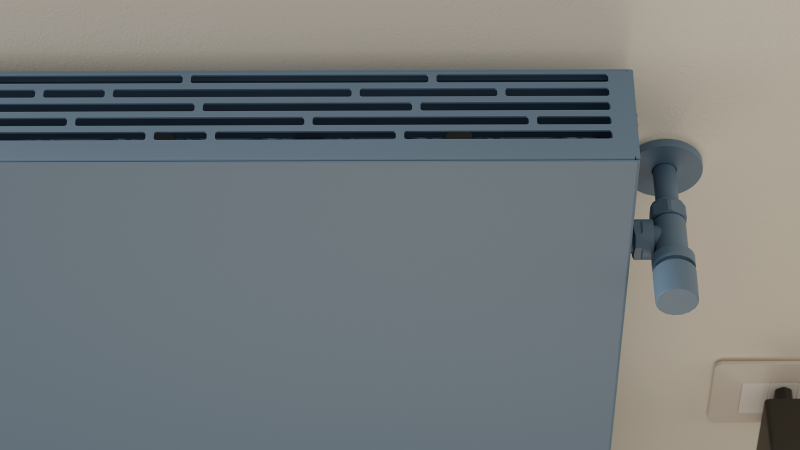
Low-temperature radiators are designed to operate efficiently with water temperatures between 30 and 40°C. This makes them ideal for use with heat pumps, with potential energy savings of up to 30%.
To compensate for the lower temperature, these radiators rely on:
- a larger heat exchange surface, often with more generous dimensions;
- dynamic technologies, such as integrated micro-fans or convectors, which promote forced convection and faster heat distribution.
Which radiators to choose for a heat pump
Aluminium radiators
Among the most suitable for heat pumps. Aluminum heats up faster than cast iron and has low thermal inertia, meaning it can quickly transfer heat to the environment even if the water flowing inside it is not boiling. Ideal for modern systems and for those seeking fast response and good energy control.
Steel radiators
They represent a good compromise between performance and design. To maximize efficiency with a heat pump, it is essential to oversize the radiant surface compared to a boiler system: a larger surface area allows rooms to be heated effectively even when using low-temperature water.
Cast iron radiators
They have high thermal inertia, so they spread heat over a long period of time, but they take longer to heat up and are less responsive to temperature changes. They can also work with a heat pump, provided they are correctly sized to compensate for lower flow temperatures compared to traditional boilers. They are a particularly suitable solution for renovations where you want to keep the existing radiators.
The importance of correct sizing
Proper radiator sizing is crucial for ensuring a heat pump system operates efficiently. Accurate calculations based on room volumes, building insulation and the needs of individual spaces help achieve consistent comfort (avoiding cold or overheated rooms) and optimised energy consumption.
How to maintain comfort and efficiency with a heat pump
A few good practices make a real difference:
- maintain a stable indoor temperature (around 19-21°C), avoiding night-time shutdowns that force the system to work at full capacity when restarted;
- optimise the heating curve to adapt flow temperature to actual outdoor conditions;
- do not cover radiators, to ensure proper heat distribution;
- clean filters and components regularly to maintain long-term efficiency;
- rely on a qualified technician for correct initial system setup.
Do existing radiators always need to be replaced?
No, existing radiators do not automatically need to be replaced when upgrading to a heat pump.
They can be kept if:
- they are in good condition (no leaks, corrosion or unusual noises);
- they provide adequate heat output;
- they are optimised with thermostatic valves and proper system balancing.
Replacement is recommended when:
- there are signs of wear (cold spots, internal sludge, leaks);
- the system is switched to a heat pump with lower flow temperatures and the radiators are undersized;
- there is a desire to improve efficiency and responsiveness by upgrading to modern models.
It is also worth considering incentives: in some cases, radiator replacement qualifies for tax incentives, making the intervention more cost-effective.
Heat pumps + radiators: real advantages
The combination of a heat pump and radiators offers tangible benefits:
- Lower energy consumption and running costs. Heat pumps use renewable energy, significantly reducing energy bills.
- No combustion, lower emissions. With no gas combustion and reduced CO₂ emissions, the system is more sustainable.
- Added value to existing systems. In many cases, existing radiators can be retained, avoiding unnecessary replacement.
Common myths about radiators and heat pumps
There are still many misconceptions surrounding heat pumps. Here are the most common ones, debunked:
- “They don’t work with radiators.” Modern high-temperature heat pumps can operate effectively with existing radiators, without mandatory replacement.
- “They don’t work in cold climates.” Latest-generation systems maintain good performance even at very low outdoor temperatures, down to –20/–25°C.
- “They’re noisy.” Modern outdoor units operate at low noise levels (around 30–50 dB), comparable to a refrigerator or light rainfall.
- “They consume huge amounts of energy.” Despite a higher initial investment, they can reduce energy costs by 20% to 60% compared to gas-based systems.
- “They require major renovation work.” In many cases, a heat pump can be integrated into the existing system, keeping both radiators and distribution pipework.

Radiators and living comfort: an integrated approach
Living comfort is not just about temperature, it is the result of a balance between:
- Heat emission. Radiators designed to perform efficiently even at low temperatures.
- Smart regulation. Precise, room-by-room temperature control.
- Air quality. A comfortable environment is also a healthy one, with renewed air and properly controlled humidity.
Radiators therefore become part of an advanced home comfort system, where heating, regulation and air quality work together. This integrated approach is reflected in IRSAP radiator solutions designed for contemporary living.
When to rely on a professional assessment
Technical consultation is recommended when:
- pairing a heat pump with existing radiators;
- working on buildings that are not perfectly insulated;
- aiming to optimise energy consumption and comfort without oversizing the system;
- planning energy refurbishment interventions.
Conclusion
Radiators and heat pumps can work together effectively, provided the system is designed correctly. With the right radiators, accurate regulation and an integrated view of comfort, it is possible to reduce energy consumption and improve everyday wellbeing, even in existing buildings.


