
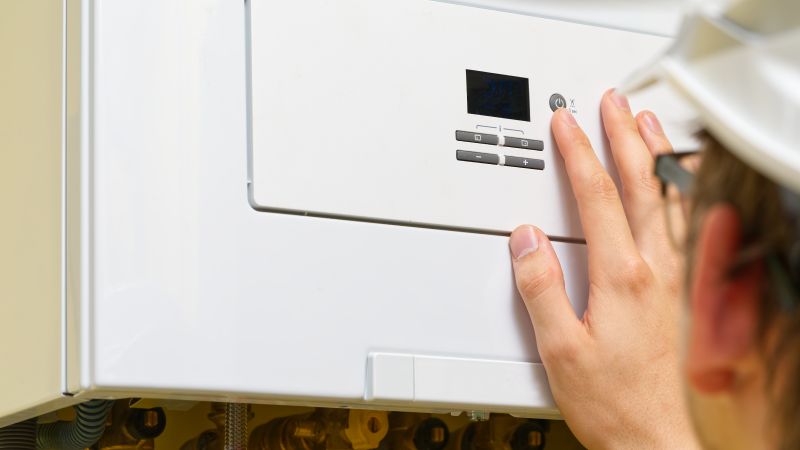
Pressure drops are one of the most common issues in domestic heating systems, especially during winter, when the boiler works more intensively and continuously.
In a typical system, pressure should generally remain between 1 and 1.5 bar when the system is cold. When it drops below 1 bar:
- the boiler may activate a safety lockout;
- radiators may not heat properly;
- error codes may appear on the display.
In this article we will look at the most common causes of boiler pressure loss, the risks involved, what you can safely do yourself, and when it is necessary to call a technician.
What is the correct boiler pressure?
The correct pressure depends on the boiler model and the manufacturer’s instructions, but in most domestic systems the reference values are quite standard.
Ideal pressure when the system Is cold
When the heating system is off (cold water), pressure should usually be between 1 and 1.5 bar.
This is the equilibrium value that allows water to circulate correctly through the radiators without overloading system components.
Difference between cold and hot pressure
When the boiler is running, the water heats up and expands. As a result, pressure naturally increases, usually reaching around 1.8-2 bar.
This variation is normal and is caused by thermal expansion of the water inside the closed circuit.
What happens if pressure drops below 1 bar
If pressure falls below 1 bar:
- the boiler may activate a safety shutdown;
- heating efficiency may decrease;
- air may enter the system, causing cold or noisy radiators.
A slight variation over time is normal. However, a constant or frequent pressure drop indicates a fault that should be checked.
The most common causes of boiler pressure loss
Pressure loss usually indicates either water leakage or a malfunctioning system component. Identifying the cause is essential to avoid repeated shutdowns or long-term damage.
Leaks in the heating system
Leaks may be:
- visible, with drops, damp areas or water marks on the floor
- micro-leaks, difficult to detect, which cause a slow but steady pressure drop
They often occur at:
- pipe joints
- connectors
- radiator valves
Faulty or discharged expansion vessel
The expansion vessel compensates for the increase in water volume when it heats up.
If it is discharged or damaged:
- pressure may increase excessively when hot
- then drop abnormally when cold
In these situations, pressure behaviour becomes unstable.
Safety valve releasing water
The safety valve protects the system from overpressure by releasing water.
If the valve remains slightly open or does not close correctly, it may cause continuous gradual pressure loss.
Bleeding radiators
After removing air from radiators, it is normal for pressure to drop slightly and require refilling the system.
However, if radiators need to be bled frequently, there may be air entering the system, possibly due to leaks or sealing problems.
Old boiler or damaged heat exchanger
In older systems, component wear can cause internal leaks that are not visible externally, for example inside the heat exchanger.
What to do if boiler pressure drops
In many cases, occasional pressure drops can be resolved easily without complex intervention. However, it is important to proceed carefully.
How to refill boiler pressure
- Switch off the boiler and wait until the system is cold.
- Locate the filling valve, usually underneath the boiler.
- Open it slowly, allowing water to enter the system.
- Monitor the pressure gauge while pressure rises.
- Stop between 1 and 1.5 bar (cold system).
- Close the filling valve carefully.
Avoid exceeding 2 bar, as excessive pressure may activate the safety valve.
When you should NOT keep refilling
If pressure drops occasionally (for example after bleeding radiators), refilling is normal.
However, if pressure drops every few days, the situation is not normal. This likely indicates:
- a leak
- a faulty component
Continuously refilling the system without identifying the cause does not solve the problem and may worsen it.
Does pressure drop only in winter? Is it normal?
A pressure drop that occurs mainly during winter is quite common. During colder months the heating system runs longer and more intensively, which can reveal issues that remain unnoticed during summer.
Possible causes include:
- increased heating cycles
- frequent thermal expansion
- air in radiators requiring bleeding
- micro-leaks that appear only during continuous operation
A small seasonal variation can be considered normal. However, if pressure regularly falls below 1 bar or requires frequent refilling, a structural issue is likely present.
Pressure drops but no visible leak: what does it mean?
If the pressure drops but there are no visible signs of water, the problem may still be present. The absence of obvious leaks does not rule out a loss within the heating system.
The most common causes in these situations include:
- Internal micro-leaks, too small to produce visible drops but sufficient to gradually reduce pressure.
- A discharged or incorrectly pressurised expansion vessel, which disrupts the balance of the system.
- Leaks in hidden areas, such as pipes running under the floor or inside walls.
- Slow discharge from the safety valve, where the water evaporates before it becomes noticeable.
Not seeing water on the floor does not necessarily mean the system is intact. A repeated pressure drop should always be investigated.

Can radiators be the cause of pressure loss?
Yes, in some cases radiators themselves can contribute to a drop in system pressure, especially if they are old or poorly maintained.
Old or corroded radiators
Over time, the following issues may occur:
- internal corrosion, which weakens the radiator walls;
- micro-leaks, often difficult to detect;
- weakened joints at connection points.
Outdated or worn valves
Radiator valves can also be responsible for pressure loss due to:
- imperfect sealing of gaskets;
- small, continuous leaks that are not always visible;
- worn components that no longer guarantee a proper seal.
When to call a technician
It is advisable to contact a professional when:
- pressure drops quickly after refilling;
- the boiler frequently goes into safety lockout;
- visible water leaks are present;
- pressure rises significantly when hot and then drops suddenly;
- a faulty expansion vessel is suspected.
How to prevent pressure drops
Proper maintenance helps reduce the risk of malfunctions and prolong the life of the heating system.
- mandatory annual maintenance, including a general boiler check;
- checking the expansion vessel, to ensure it is correctly pressurised;
- bleeding radiators correctly, avoiding excessive or repeated interventions;
- periodic inspection of valves and joints;
- monitoring system pressure, especially during winter.
FAQ
Is it dangerous if the boiler loses pressure? It is not immediately dangerous, but it can cause system shutdowns and malfunctions. If the issue occurs repeatedly, it should be investigated.
Can I use the boiler with low pressure? If pressure drops below 1 bar, the boiler may not function properly or may enter safety lockout. Restoring the correct pressure level is recommended.
How often should the system need refilling? Occasionally this may be normal. If refilling is required every few days or weeks, the situation is not normal.
Does pressure drop when the heating is switched off? Yes. It is normal for pressure to be lower when the system is cold than when it is operating.
Why does the boiler lose pressure without leaking water? Possible causes include micro-leaks, expansion vessel problems or slow discharge from the safety valve.
Is it normal for pressure to drop after bleeding radiators? Yes. Removing air from the system usually requires a slight pressure refill afterwards.


