
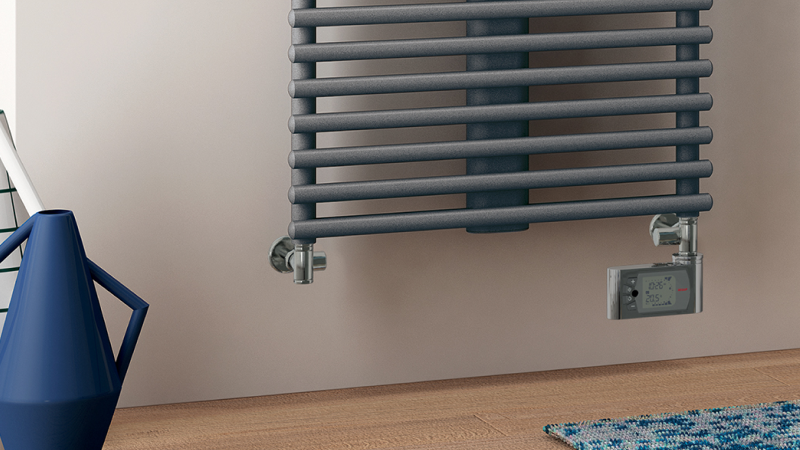
Hybrid radiators are designed to provide comfort and flexibility, as they combine both hydraulic and electric power supply within a single product. This allows them to operate either connected to the heating system or in electric mode, adapting to different seasonal needs and usage requirements.
What are hybrid radiators
Hybrid radiators, also known as dual-fuel radiators, are designed to operate both in hydraulic mode, connected to a hot water heating system, and in electric mode, thanks to an integrated heating element.
This dual power supply allows you to choose how to heat the room depending on the situation. Hybrid radiators are particularly useful during mid-season periods, such as spring and autumn, when the heating system is switched off but additional warmth may still be needed.
How hybrid radiators work
The dual power supply of hybrid radiators allows you to select the most suitable solution based on your needs.
When connected to the heating system, the radiator uses hot water to provide steady and continuous heat. Alternatively, the electric heating element delivers fast and immediate warmth, which is useful, for example, for drying towels or heating a room when the boiler is switched off, as often happens during the summer months.
The two operating modes can be managed manually or via a programmable thermostat, allowing you to schedule operation and choose the most convenient energy source.
Hybrid radiators: operation in hydraulic mode
In hydraulic mode, hybrid radiators work like traditional radiators. They are connected to the heating system (boiler, heat pump, etc.), whether centralised or individual, and use the hot water produced by the boiler, condensing or hybrid, to heat the room.
Heat is released in a steady and even way, making this mode particularly suitable for the colder months. It can operate either as a replacement for or as a complement to the home’s main heating system (traditional radiators or underfloor heating). Control is managed through valves and lockshield valves, which regulate the amount of heat emitted according to room requirements.
Hybrid radiators: operation in electric mode
In electric mode, hybrid radiators operate independently thanks to an integrated electric heating element. This heats a heat-transfer fluid, typically a mixture of water and antifreeze, contained inside the radiator, allowing it to function without being connected to the boiler.
Power is supplied through a standard electrical socket, making this mode ideal during mid-season periods or when the central heating system is switched off. Heat is produced quickly and immediately, and can be controlled and programmed via a thermostat.
When hybrid mode comes into play
Hybrid mode becomes particularly useful when heating needs vary and flexibility is required.
This is especially true in rooms such as bathrooms, where additional warmth is often desired outside the operating hours of the central heating system. For example, during spring or autumn, when the heating is off but temperatures are still cool, electric mode allows the room to be warmed or towels to be dried quickly and efficiently.
During colder months, the radiator can operate in hydraulic mode, supporting the main heating system and ensuring continuous warmth. The ability to switch between modes guarantees the right level of comfort at all times, while enabling more efficient and personalised heat management.
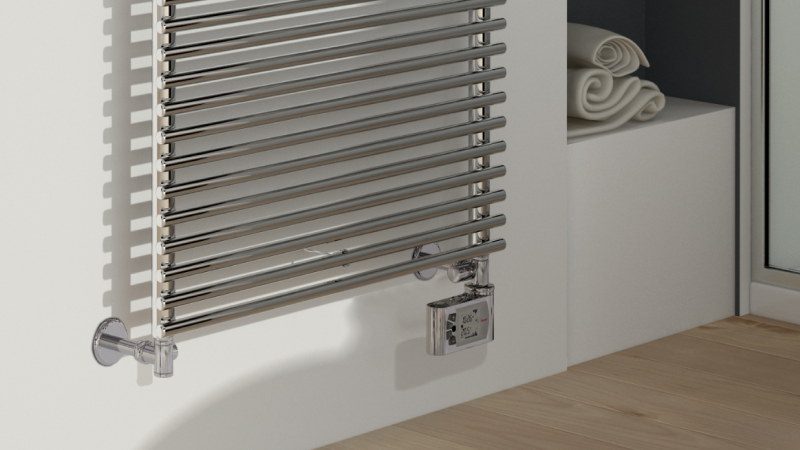
The advantages of hybrid radiators
Choosing hybrid radiators means opting for a solution designed to offer maximum flexibility throughout the year.
- Comfort during mid-season and summer. The main advantage is independence from the central heating system thanks to the electric component. When the boiler is switched off, the heating element allows the bathroom to be heated autonomously without activating the entire system.
- Fast and efficient heating. In electric mode, the radiator delivers even heat distribution in a short time, making it ideal for targeted use. Each model is designed with appropriate electric output to ensure good performance without unnecessary energy waste.
- Easy installation and versatility. Dual operation can be integrated without modifying the existing system. Thanks to dedicated technical solutions, the electric heating element can also be installed at a later stage, making hybrid radiators suitable for both new installations and renovations.
- Smart control (electric versions only). For fully electric models (not hybrid), integration with systems such as IRSAP NOW allows remote management, scheduling and temperature control, improving comfort and energy management.
Are there any drawbacks to consider?
Like any heating solution, hybrid radiators have aspects to evaluate before purchase.
- Slightly higher initial cost. Compared to purely hydraulic or purely electric radiators, hybrid versions may have a higher upfront cost. However, this investment is offset by greater flexibility and year-round usability.
- Careful selection during the design phase. Hybrid radiators perform best when chosen thoughtfully. It is important to assess the model, output and operating mode according to room size, habits and the type of heating system installed.
- Not always necessary. In homes with very simple heating needs or limited off-season use, a traditional solution may be more than sufficient.
When are hybrid radiators truly worth it?
Hybrid radiators are a suitable solution, for example, when replacing an old boiler while wishing to keep a radiator-based system and avoid complex structural work.
They are also advantageous in buildings that are not perfectly insulated but not excessively inefficient either, where switching between different heating modes depending on climatic conditions can improve efficiency. In mixed climate zones with variable winters, hybrid radiators allow more efficient solutions to be used during milder periods, while traditional systems can handle higher heating demand when necessary.
IRSAP hybrid radiator solutions
Most IRSAP bathroom radiators are designed for hybrid (dual-fuel) operation. The main ranges compatible with hybrid configuration include: Ares, Venus, Novo, Novo Cult, Jazz_S, Soul_S, Funky_S, Vela, Rigo, ELLIPSIS_30b, ELLIPSIS FLAUTO, FLAUTO 2 and KART.
This compatibility allows you to choose solutions that are coherent from both an aesthetic and functional perspective, while maintaining the option to use the radiator even when the heating system is switched off.
To explore the full range of IRSAP radiators, you can visit the dedicated radiator category.
Why choose an IRSAP hybrid radiator
Choosing an IRSAP hybrid radiator means opting for a solution capable of adapting to different needs throughout the year, offering practicality and freedom of use.
The main reasons to choose this configuration include:
- Year-round comfort
- Fast and efficient heating
- Smart control via IRSAP NOW (for fully electric radiators only, not hybrid models)
- Easy installation
- Wide aesthetic choice
Conclusion
Hybrid radiators are designed for those seeking greater flexibility in heat management, thanks to the option of using both hydraulic and electric power.
They are worth choosing when you need a versatile radiator that can be used all year round and when it is selected in line with the heating system and the home’s actual needs. Carefully evaluating the model, output and operating mode is the right step to achieve comfort and efficiency without waste.


