
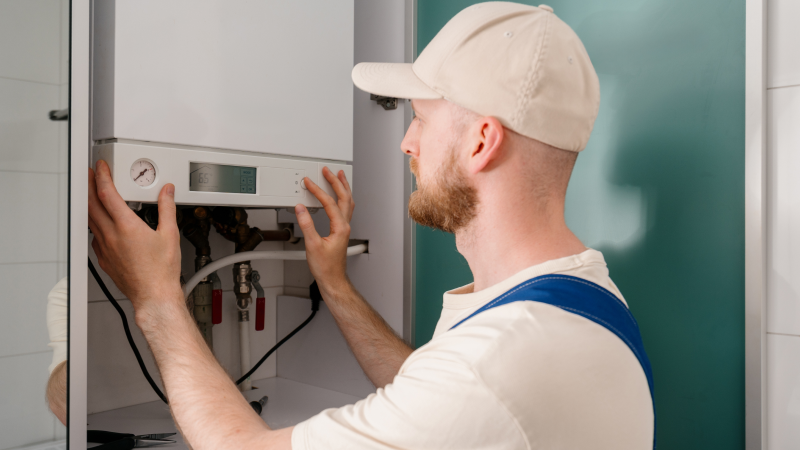
The boiler is still working, but energy bills keep rising. Or it suddenly breaks down, perhaps right in the middle of winter, when you need it most. These are very common situations that always lead to the same question: is it worth replacing the boiler, or is repairing it the better option?
Understanding when it is truly the right time to intervene is not always straightforward. In many cases, replacing a gas boiler is not only a technical decision, but above all an economic one, because it directly affects energy consumption, efficiency and access to available incentives.
Today, several factors come into play: rising energy costs, new high-efficiency technologies and financial incentives that can make the investment more sustainable.
In this article, we’ll look at:
-
when replacing a boiler makes sense;
-
the costs involved;
-
which incentives are available;
-
and which alternatives may help improve comfort while reducing energy consumption.
When is it necessary to replace a gas boiler?
There is no universal rule, but there are clear signs that indicate when replacement becomes the most sensible option.
How long does a gas boiler last?
A boiler can last 10-15 years or even longer, but that does not mean it remains efficient throughout its entire lifespan.
It is important to distinguish between:
-
a boiler that still works;
-
and a boiler that works efficiently.
Over time, efficiency decreases: more energy is required to achieve the same heating result.
Reduced performance and higher consumption
An ageing boiler generally consumes more energy to produce the same amount of heat.
The result is:
-
higher energy bills;
-
longer heating times;
-
less stable comfort.
If you notice these signs, replacing the boiler is often more cost-effective than continuing to consume more energy.
Frequent breakdowns and expensive maintenance
If the boiler requires constant repairs, maintenance eventually stops being economically worthwhile. In particular:
-
recurring breakdowns;
-
high maintenance costs;
-
difficulty sourcing spare parts;
are all signs that it may be time to consider replacement rather than continued repairs.
Emergency boiler rReplacement: what should you do?
When a boiler suddenly stops working, it is easy to make rushed decisions. Even in emergency situations, however, it is important to remain rational.
What should you do first?
-
Check whether it is only a temporary fault (pressure issue, reset needed, power supply problem).
-
Contact a technician to understand whether repair is possible.
-
Evaluate timing: if the repair is uncertain or lengthy, replacing the boiler immediately may make more sense.
How can you quickly choose the right solution?
-
Choose a boiler compatible with the existing system (radiator material and sizing, any smart control systems already installed).
-
Consider efficient models, such as condensing boilers, to reduce energy consumption.
-
Rely on an installer capable of guaranteeing quick installation times.
Mistakes to avoid
-
Choosing the first available solution without considering efficiency;
-
Ignoring compatibility with the existing radiators or heating system;
-
Focusing only on purchase price without considering efficiency and durability.
How much does it cost to replace a gas boiler?
Replacement costs depend on several factors: the type of boiler, installation complexity and the condition of the existing system.
Boiler cost
Prices mainly vary depending on the technology:
-
Traditional boilers are generally cheaper, but less efficient and increasingly outdated.
-
Condensing boilers have a higher initial cost, but lower energy consumption and greater efficiency.
Installation costs
Installation involves more than simply fitting the new boiler. Costs generally include:
-
installer labour;
-
removal and disposal of the old boiler;
-
hydraulic and electrical connections;
-
any basic compliance upgrades required by regulations.
Hidden costs to consider
In some cases, the final cost may increase due to additional works, such as:
-
modifications to the existing heating system;
-
flue system upgrades or replacement;
-
condensate drain works;
-
updates required to comply with current regulations.
Incentives and tax deductions for boiler replacement
Replacing a gas boiler can become more affordable thanks to tax incentives, which allow part of the investment to be recovered.
Available incentives vary depending on the type of intervention and the installed technology, but generally allow significant tax deductions on total costs.
Which incentives are available?
The main incentives include:
-
Renovation Bonus (50%). Applies to extraordinary maintenance works, including boiler replacement.
-
Ecobonus (up to 65%). Applies to energy-efficiency improvements, such as installing high-efficiency condensing boilers or advanced control systems.
-
Other Local or Specific Incentives. In some cases, regional or municipal grants may also be available.
The percentage of deduction depends on the installed system and the level of energy improvement achieved.
How do you apply for tax deductions?
The process is relatively straightforward:
-
pay using a traceable bank transfer specifically intended for tax deductions;
-
keep invoices and technical documentation;
-
submit intervention data to ENEA where required;
-
recover the deduction through the annual tax return.
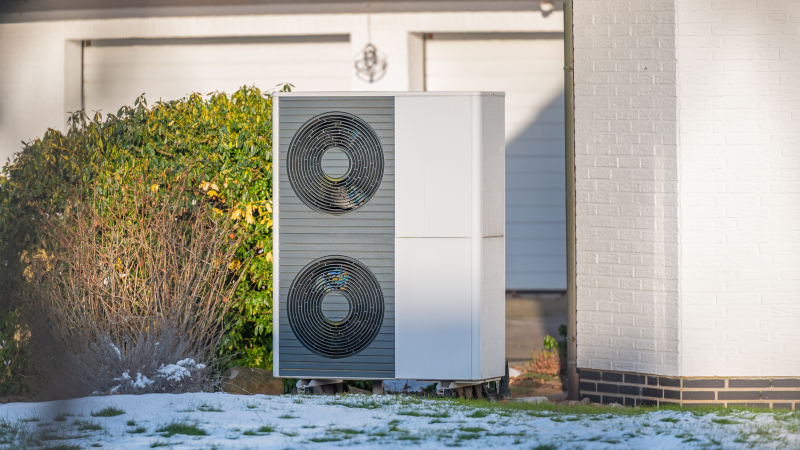
Replacing a boiler with a heat pump: when does it make sense?
More and more homeowners are considering replacing gas boilers with heat pumps, especially to reduce energy consumption and adopt more efficient and sustainable systems. However, this is not an automatic choice: it must be evaluated case by case.
Preliminary checks
Before choosing a heat pump, it is important to verify:
-
the insulation level of the building: the more efficient the building envelope, the better the performance;
-
the type of heating system: radiators or underfloor heating (preferably low-temperature systems);
-
available space for the outdoor unit and internal components.
System sizing
Correctly sizing a heat pump means choosing the appropriate output based on the characteristics of the building.
If undersized, it may struggle to guarantee comfort during colder days; if oversized, it may consume more energy than necessary. Proper sizing allows the system to operate efficiently, maintain stable temperatures and reduce operating costs.
Hybrid systems: a middle ground
If you are unsure about switching completely to a heat pump, there is an intermediate solution: the hybrid system.
It combines:
-
a heat pump;
-
and a gas boiler.
The system automatically uses:
-
the heat pump when conditions are favourable;
-
the boiler during peak demand or very low outdoor temperatures.
The advantage is a more flexible and efficient system that adapts automatically to changing conditions, reducing energy consumption without compromising comfort.
Is it possible to replace the boiler without modifying the heating system?
In many cases, it is possible to replace a boiler without making major changes to the existing system, especially when replacing it with another boiler of similar characteristics.
This solution is generally quicker and less expensive, but not always the most efficient. Keeping an outdated system may limit the performance of the new boiler and prevent you from fully benefiting from its advantages.
The main limitations include:
-
systems not optimised for modern technologies such as condensing boilers;
-
less efficient heat distribution;
-
higher energy consumption compared to updated systems.
In some cases, therefore, it may be more worthwhile to also consider improvements such as upgrading system controls, replacing radiators and integrating more advanced smart control systems.

The role of radiators in heating efficiency
Heating efficiency does not depend solely on the boiler, but also on how heat is distributed throughout the home.
Radiators play a central role: they are the final element of the system and directly affect comfort, heating response times and energy consumption.
Modern radiators can:
-
improve thermal output by distributing heat more evenly;
-
reduce energy consumption by operating efficiently even at lower temperatures;
-
increase comfort with faster and more stable heat response.
For this reason, when replacing a boiler, it is useful to also evaluate the condition of the radiators: a fully upgraded system is always more efficient.
Discover the complete IRSAP radiator range here.
How to improve heating efficiency after boiler replacement
Temperature control and smart systems
After replacing the boiler, one of the most effective ways to improve efficiency is proper temperature management.
Smart control systems make it possible to:
-
regulate heating according to schedules and occupancy;
-
avoid unnecessary energy waste;
-
maintain stable and comfortable indoor temperatures.
Solutions such as IRSAP NOW allow more precise control, even remotely, helping optimise energy consumption easily.
Even heat distribution
An efficient heating system should not only generate heat, but distribute it evenly.
If heat does not reach every room properly:
-
some rooms become too warm;
-
others remain cold;
-
occupants tend to raise the temperature, increasing energy consumption.
When is replacing a gas boiler really worth it?
Replacing a boiler is truly worthwhile when several factors combine to affect both costs and efficiency.
In particular, it is generally the right time when:
-
the boiler is more than 10-15 years old and no longer performs efficiently;
-
energy consumption has increased without improving comfort;
-
maintenance costs become frequent and expensive;
-
there is significant potential to improve efficiency through more modern technologies.
In these situations, continuing to repair the boiler often becomes only a temporary solution. Replacing it instead becomes an investment capable of reducing consumption, improving comfort and taking advantage of available incentives.
The best choice is always the one that considers all these aspects together, evaluating the heating system as a whole rather than focusing on a single component.
Improving heating efficiency with more efficient solutions: the IRSAP contribution
As described above, the real efficiency of a heating system does not depend on a single component, but on the integration of several elements working together.
In particular, the best results are achieved by combining:
-
modern heat generators, such as condensing boilers or heat pumps;
-
advanced control systems capable of intelligently managing temperatures and consumption;
-
high-performance radiators capable of distributing heat effectively and evenly.
This integrated approach improves comfort, reduces waste and maximises the benefits of available technologies.
Solutions such as IRSAP radiators help improve heating performance even at lower operating temperatures, while smart control systems like IRSAP NOW make it possible to optimise consumption and adapt heating to real everyday needs.


