
It’s one of the most common questions when it comes to radiators: which ones are the best? Thermal comfort and energy efficiency are among the main factors considered in the final choice, but today a third element has joined them: aesthetics.
Ongoing innovation in the sector and continuous design research now make it possible to choose radiators that not only heat living spaces effectively, but also add a personalized touch — this is the case, for example, with tubular radiators. But are they really better than traditional ones? Let’s find out together.
Steel
A real difference between tubular and traditional radiators lies essentially in their shape.
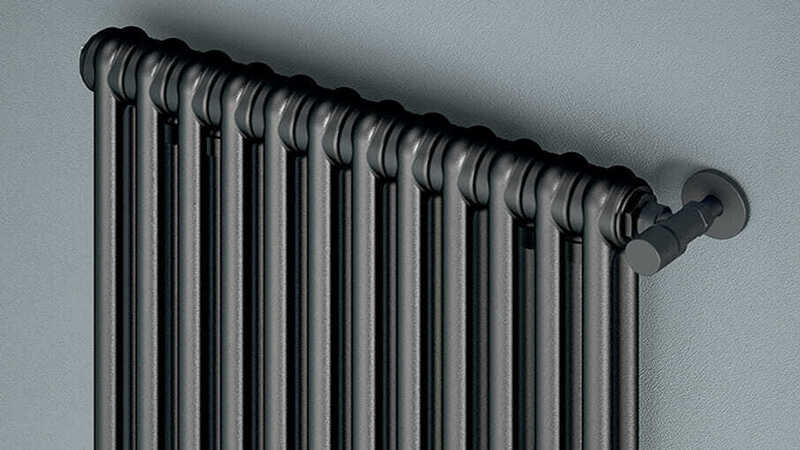
- Tubular radiators feature a modern, refined design with rounded heating elements.
- Traditional radiators have lines rooted in the past and, in common language, are often associated with cast iron radiators.
For both types, however, it is the material they are made from that determines which option is more convenient or reliable.
Steel, for example, allows the radiator to heat up quickly and retain warmth for a long time once switched off. Not surprisingly, it is widely used for tubular radiators:
- on the one hand, it offers high thermal inertia;
- on the other, it lends itself perfectly to sophisticated designs in modern and contemporary styles.
Aluminum
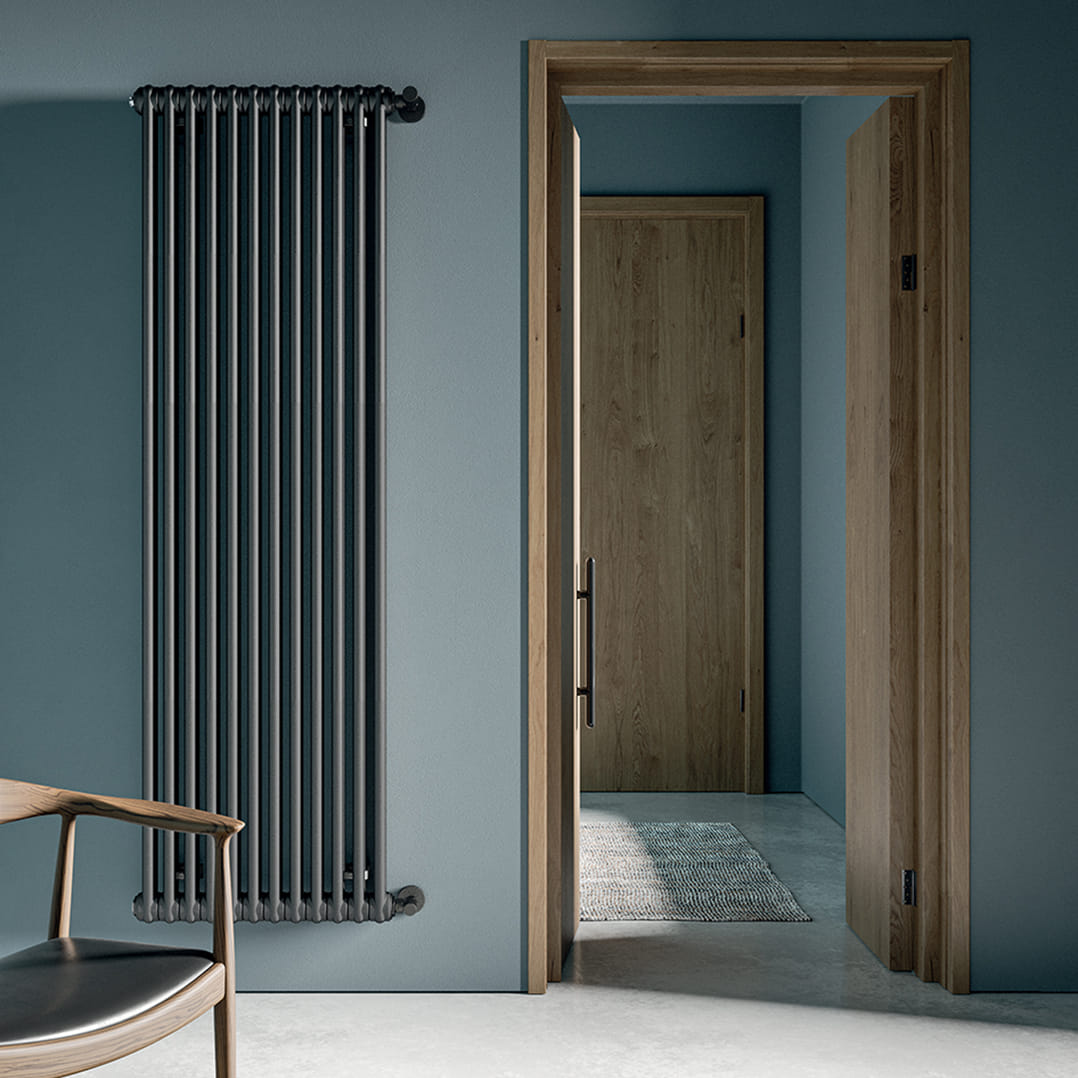
Aluminum is another material that meets the demands of contemporary design in radiators. However, while aluminum radiators heat up quickly — like steel ones — they also cool down just as rapidly once the system is turned off.
Aluminum tubular radiators are therefore more suitable for intermittent use, while steel radiators are recommended for prolonged use and for systems with lower flow temperatures (that is, the temperature of the water delivered to the radiator by the heat generator).
Tall radiators
The added value of tubular radiators lies in their versatility: they adapt to any living context and add a distinctive touch of style.
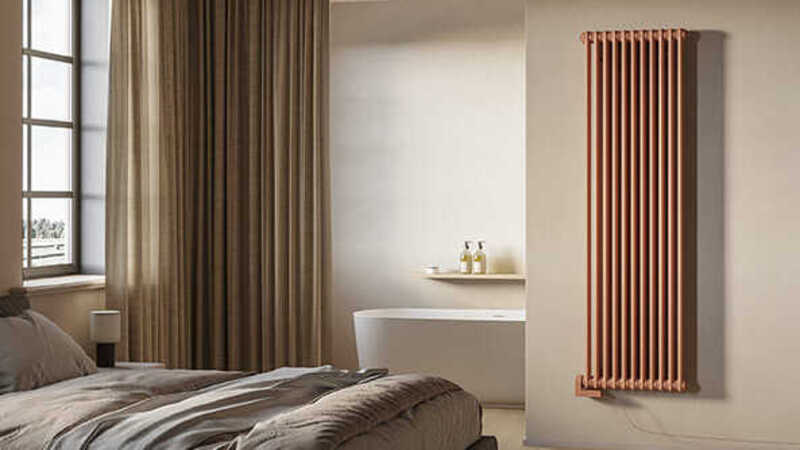
In addition to standard-sized models, the market also offers tall tubular radiators.
- Made with a smaller number of columns, some models exceed two meters in height.
- They give rooms a sense of verticality and can be installed on narrow walls or in spaces with limited room.
They have a modern, elegant look and a very limited footprint, thanks to their vertical rather than horizontal development.
White (and other finishes)
The contemporary aesthetic of tubular radiators is also defined by the wide range of finishes available — another added value of modern designer heating for creating welcoming interiors to suit different styles.
Alongside white, the most common color, there are bolder shades (such as red and gray) as well as softer tones. However, it should be noted that color choice affects radiator efficiency.
- Dark colors and matte finishes absorb heat better and radiate it more effectively.
- Light colors and glossy finishes, on the other hand, slightly reduce it.
- That said, the performance difference between a black radiator and a white one is practically negligible.
Which radiators produce the most heat?
Depending on the material they are made of, radiators offer different performance levels.
- Aluminum radiators heat up quickly but also cool down rapidly.
- Cast iron radiators take a long time to heat up but retain warmth for a long time after being switched off.
- Steel radiators heat up quickly and retain heat once turned off, unlike aluminum models.
Which radiators are the most efficient?
Aluminum radiators are ideal for environments where the heating system is used intermittently, as they heat up quickly. Cast iron radiators, on the other hand, are best suited to continuous heating, since they take a long time to reach the desired temperature. Steel radiators represent the right compromise between the two.
How much do tubular radiators cost?
Modern, design-focused radiators—including tubular models—vary in price depending on their size and output. Good-quality products start at around €140 and can exceed €400 for large designer radiators made up of many elements.


