
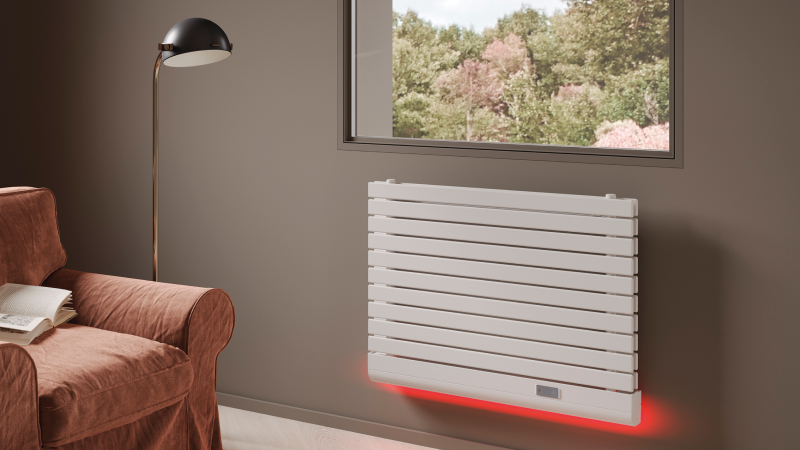
Choosing the best electric towel radiator means finding the right balance between thermal comfort, energy consumption and aesthetic integration within the home.
It is not just a functional element, but a heating solution that must provide good thermal performance, precise temperature control and coherence with the space where it is installed.
In this guide, we’ll look at:
- how to choose the most suitable electric towel radiator;
- the differences between the main available types;
- which solutions currently offer the best performance in terms of efficiency and comfort.
What is an electric towel radiator and why choose one?
An electric towel radiator is a radiator that uses electricity to heat rooms, combining heating functionality with aesthetic value. Unlike traditional hydronic radiators connected to the heating system, an electric towel radiator operates independently and does not require connection to a boiler.
In recent years, it has become increasingly popular because it meets several needs:
- simple installation, without modifying the existing heating system;
- flexible use, ideal even in rooms not served by central heating;
- precise control, thanks to integrated thermostats and programming functions;
- refined design, created to integrate seamlessly into living spaces.
It is particularly suitable for:
- light renovation projects;
- integration with the main heating system;
- second homes or rooms used intermittently.
Electric or hydronic towel radiator: which should you choose?
The choice depends less on product quality and more on the type of heating system, usage habits and the level of flexibility required.
Electric towel radiator: when is it the best choice?
An electric towel radiator is the most suitable solution when you are looking for:
- immediate heat, without depending on central heating schedules;
- simple installation, without masonry work or hydraulic connections;
- flexible use, even only during certain parts of the day;
- integration with other systems (such as underfloor heating or central heating systems).
It is particularly suitable in spaces such as bathrooms, where fast and targeted heating is required, or in homes where modifying the existing system is not possible.
The most recent models also offer advanced regulation and programming functions, improving energy management.
Hydronic towel radiator: when does it make sense?
A hydronic towel radiator remains the most coherent solution when:
- there is already a water-based heating system installed;
- continuous heating throughout the home is required;
- the property uses a boiler or heat pump, capable of operating efficiently with hydronic radiators designed to perform well even at low water temperatures.
It is a more “structural” solution, integrated into the heating system, but requiring dedicated installation and maintenance.
In summary: which should you choose?
- Choose an electric towel radiator if you need flexibility, easy installation and targeted use (e.g. bathrooms, second homes or supplementary heating).
- Choose a hydronic towel radiator if you need continuous heating throughout the house using a centralised or autonomous heating system.
In both cases, it is important to evaluate product quality and thermal performance. To explore the available solutions, you can consult the dedicated category for radiators and towel radiators.
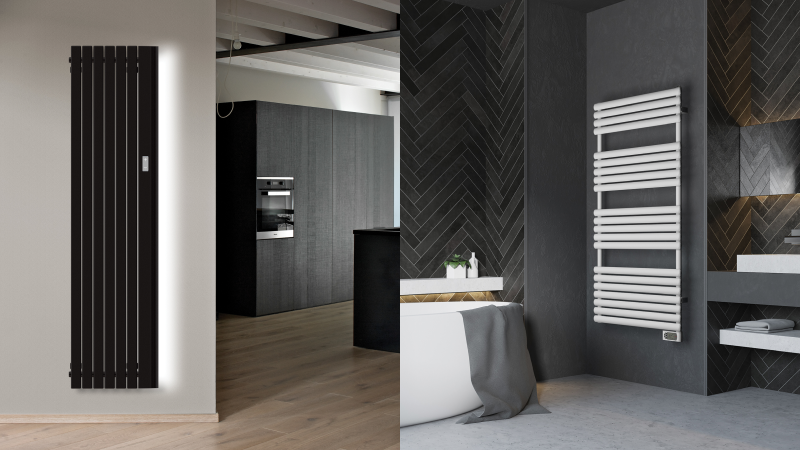
Towel radiator vs heated towel rail: what’s the difference?
These terms are often used interchangeably, but there is a technical difference between a towel radiator and a heated towel rail.
A towel radiator is a radiator designed to heat a room, with particular attention paid to design. It can be installed in different areas of the home (living rooms, bedrooms, bathrooms) and is available in various shapes, sizes and orientations (vertical or horizontal).
A heated towel rail, on the other hand, is a specific type of towel radiator mainly designed for bathrooms. In addition to heating the room, it has an extra function:
- drying and warming towels and textiles;
- offering horizontal bars to conveniently hang towels.
How to choose the best electric towel radiator
Choosing the right electric towel radiator depends on several factors.
Power output (how many watts do you need?)
An undersized towel radiator will not provide enough heat, while an oversized one will consume more energy than necessary. As a rough guide:
- Small bathroom (3-5 m²) → 300–500 W
- Medium bathroom (5-8 m²) → 500–750 W
- Large bathroom (8-12 m²) → 750–1200 W
These are indicative values only: for a truly accurate choice, it is always best to calculate the heating requirement based on the actual characteristics of the room.
You can do this with our configurator, which helps identify the most suitable output for your space.
These values may vary depending on:
- building insulation;
- ceiling height;
- presence of external walls or windows.
Dimensions and available space
The towel radiator should be proportionate to the available space:
- in small bathrooms, a vertical model is usually preferable, as it occupies less wall space;
- in larger rooms, larger or horizontal solutions may be considered;
- it is important to consider the space needed for hanging towels if used as a heated towel rail.
Positioning also affects performance: ideally near the area of use, but without obstacles that could limit heat diffusion.
Energy consumption and efficiency
Modern electric towel radiators are designed to optimise energy consumption, but real savings depend on regulation. To improve efficiency:
- choose models with integrated thermostats;
- programme switching on and off;
- avoid unnecessary continuous operation.
Advanced control systems - such as IRSAP NOW - allow more precise temperature management and help reduce waste.
Materials and performance
Materials influence heating speed and heat distribution:
- Aluminium → heats up quickly, ideal for short and frequent use;
- Steel → good balance between performance and durability;
- High thermal inertia materials → slower and more gradual heat release.
Design and integration
A towel radiator is a visible element and should integrate with the surrounding environment. Consider:
- shape (linear, tubular, geometric);
- orientation (vertical/horizontal);
- colours and finishes.
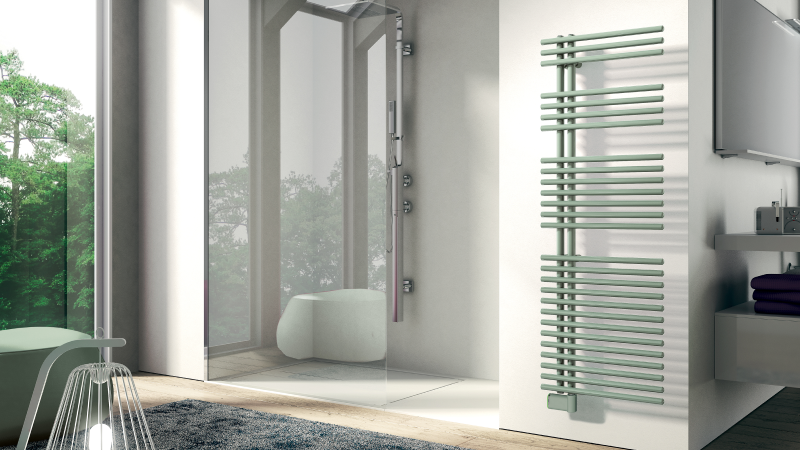
The best electric towel radiators for bathrooms
The bathroom is one of the most distinctive spaces in the home, combining practical needs with moments of wellbeing and relaxation. In this context, the choice of towel radiator must take into account both functionality and aesthetics.
On the one hand, it is important to choose models with clean lines that are easy to maintain. On the other hand, more contemporary designs go beyond the traditional concept of the heated towel rail, introducing solutions with stronger design identity and better integration into the space.
Within the IRSAP range, several solutions are available:
- NOVO, characterised by minimalist and fluid geometry, available in several sizes to fit even compact bathrooms;
- FUNKY_S, featuring round tubes and manifolds, reversible and suitable for different system configurations;
- JAZZ_S, with a square design, compatible with advanced control systems for temperature management and programming;
The best IRSAP electric towel radiators
The IRSAP range includes several towel radiator solutions, also available in electric versions, designed to suit different living contexts. The choice mainly depends on space, usage and the level of aesthetic integration required.
ARPA, PIANO, ELLIPSIS, SAX
These lines represent versatile solutions, available in both vertical and horizontal formats.
-
Who are they suitable for? Residential spaces requiring good thermal performance combined with essential design.
-
When should you choose them? In living rooms, bedrooms or bathrooms where a balance between functionality and discreet integration is desired.
TESI
TESI is a more classic solution reinterpreted in a contemporary way.
- Who is it suitable for? Those looking for a radiator with stronger visual presence while maintaining recognisable lines.
- When should you choose it? In traditional interiors or renovation projects where it is important to maintain aesthetic coherence with the existing style.
STEP and RELAX
These ranges stand out for their modern design and technical solutions focused on comfort.
- Who are they suitable for? Users looking for a contemporary towel radiator with attention to practicality.
- When should you choose them? In spaces such as bathrooms or bedrooms, where fast heat response and efficient use of space are important.
SEQUENZE, POLYGON, QUADRAQUA, IMMAGINA, DEDALO
These lines represent the high-design segment, featuring stronger geometric forms.
- Who are they suitable for? Those who consider the towel radiator not only a heating element, but also an architectural and decorative feature.
- When should you choose them? In environments where the radiator becomes a focal point of the space, such as living rooms or designer bathrooms.
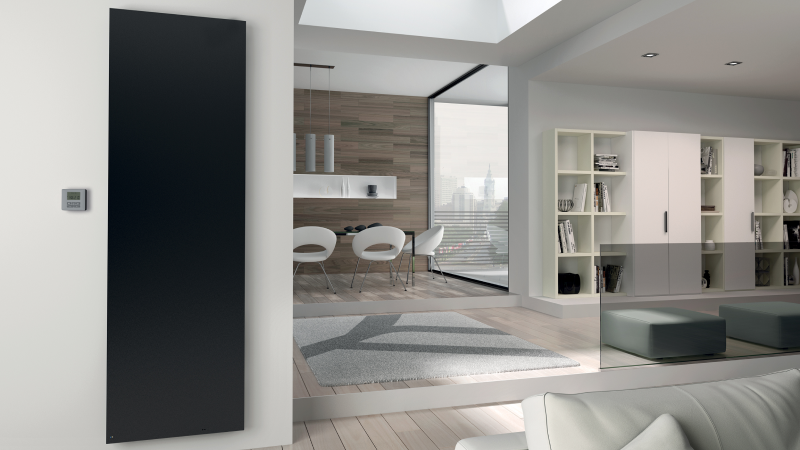
What is the best electric towel radiator?
There is no single “best” electric towel radiator in absolute terms. The right choice always depends on the specific needs of the room and how it will be used.
In particular, it is important to evaluate:
- the size and type of space (small bathroom, large bathroom, second home, etc.);
- frequency of use (daily or occasional);
- building insulation level;
- the need for rapid heating response;
- integration with furniture and interior style.


